The healthcare revenue cycle is increasingly complex. Fragmentation between clinical systems like Epic and Cerner and financial systems such as billing, claims, and accounts receivable platforms often limits visibility into the true drivers of denials, reimbursement delays, and patient-level profitability. For hospitals and health systems navigating this landscape, siloed data isn’t just inconvenient, it can directly impact financial performance.
Why Integration Matters
As organizations shift toward value-based care and risk-based contracts, it’s no longer sufficient to analyze revenue cycle metrics in isolation. Financial outcomes are intrinsically tied to clinical documentation, care delivery, and patient complexity. Without a holistic view, health systems risk overlooking the root causes of denials, underpayments, or inefficient workflows.
Unified analytics, where EHR data, claims, billing, and AR information converge, offers a solution. By connecting these disparate data sources, organizations can generate actionable insights that improve both clinical and financial outcomes. For example:
- Identifying clinical documentation gaps that contribute to coding denials.
- Understanding which service lines carry the highest cost-to-collect.
- Linking patient severity and complexity to expected reimbursement.
Enabling Technologies
Modern integration capabilities are making unified analytics increasingly attainable. Health systems are leveraging:
- FHIR APIs to standardize clinical data exchange.
- Data lakes and cloud-based platforms (such as Azure or Databricks) to centralize and harmonize information.
- ETL pipelines and robust data engineering practices to ensure accurate and timely data flows.
These technologies enable interoperability at scale, transforming raw data into actionable insights for leadership and operational teams.
Real-World Use Cases
Unified analytics can unlock tangible benefits for healthcare organizations:
- Predictive analytics that link clinical severity to expected reimbursement, guiding staffing and care planning decisions.
- Denial root cause analysis, pinpointing systemic issues tied to specific providers or departments.
- Integrated dashboards that allow CFOs and CMOs to collaborate on strategy, combining financial performance metrics with clinical outcomes in real time.
How Healthrise Supports Unified Analytics
Healthrise empowers health systems to bridge clinical and financial data gaps through offerings tailored to Revenue Cycle Management (RCM) success:
- Qodex Analytics Suite transforms disparate clinical and financial data into actionable insights.
- Denials Navigator identifies patterns and provides remediation strategies to minimize revenue leakage.
- Data Engineering Services build the pipelines and governance frameworks that make integrated analytics possible.
By leveraging these solutions, organizations can accelerate decision-making, optimize financial performance, and align analytics initiatives with strategic priorities, ensuring that both clinical and financial teams are working from the same, accurate data foundation.
Conclusion
In a healthcare environment increasingly focused on value-based care, unified analytics is no longer optional, it’s essential. Integrating clinical and financial data equips health systems with the insights needed to reduce denials, improve reimbursement, and make smarter operational decisions. With Healthrise’s expertise and technology solutions, organizations can turn data fragmentation into a strategic advantage, ultimately improving both patient outcomes and financial performance.
If your organization is ready to reimagine its revenue cycle technology, Healthrise is here to guide the way.
Contact us today to learn more about our hands-on approach and premier software designed specifically for health systems and hospitals to optimize performance, improve financial outcomes, and streamline workforce management.
Discover Our Full Technology Product Suite:
Denials Navigator
Centralize and standardize tracking for all denials prevention efforts and results across your health system to proactively tackle denial challenges with unparalleled efficiency and precision.
Quality Audit + Productivity
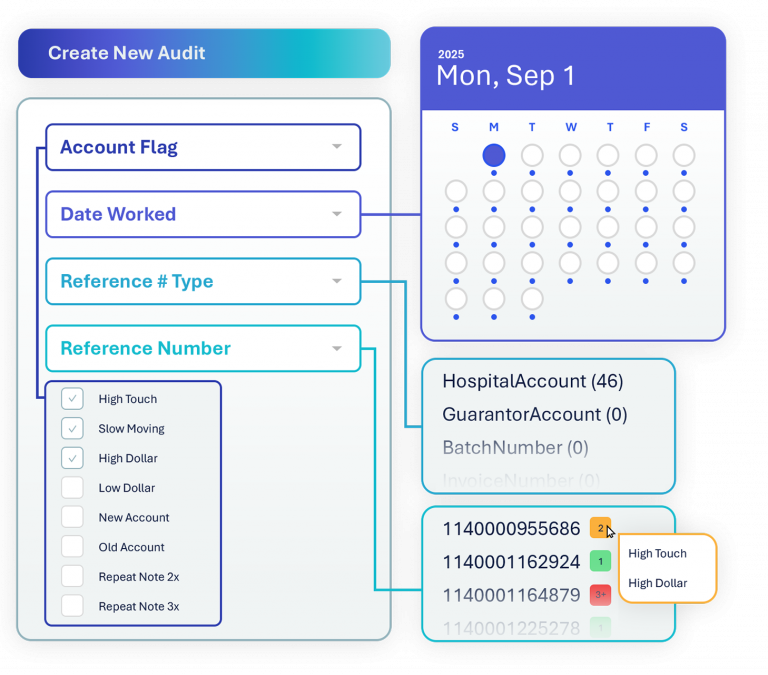
Streamline the auditing process, provide comprehensive reporting capabilities, and facilitate staff assessments, all in one user-friendly platform. With QA+P, managers can easily identify areas for education and process improvements across all revenue cycle teams.
Revenue Cycle Analytics
Powered by advanced algorithms and intuitive dashboards, our platform provides comprehensive insights into revenue cycle performance, allowing hospitals to identify trends, pinpoint areas for improvement, and optimize workflows.
Demand Workforce
Optimize and simplify how charge and staff nurses fill available shifts, enhancing staffing efficiency with our cloud-based web and mobile app.