Author: Ayana Feyissa, Technology Services
As robotic process automation (RPA) and artificial intelligence (AI) continue to transform healthcare operations, few functions are undergoing more rapid change than revenue cycle management (RCM). For RCM leaders, the automation trend brings both promise and pressure. They get the opportunity to improve efficiency, reduce costs, and enhance performance, but often with fewer hands on the keyboard.
But what happens to the RCM analysts on the front lines of claims, denials, and reimbursement workflows as more of their responsibilities are automated? Is their role at risk, or is it simply evolving?
While automation is displacing repetitive tasks, it is simultaneously creating new, higher-value roles. Many of these roles are best suited for the very analysts whose work is changing.
From Horses to Tractors: A Lesson in Technological Transition
To understand this shift, consider a historical parallel: the agricultural revolution. In the early 1900s, the U.S. farm economy was powered by horses, manual labor, and human endurance. Then came the tractor, which is faster, more efficient, and ultimately transformative.
At first, fears of mass job loss spread. But over time, new roles emerged; roles such as tractor operators, mechanics, logistics experts, and equipment designers. Those who had worked with horses and understood the land were often best positioned to take on the new roles, because they understood the context in which the new tools would operate.
Today’s revenue cycle is undergoing a similar shift. RPA and AI are the “tractors” of healthcare finance. It is, and will continue, replacing manual repetitive tasks, but not replacing the workforce. Rather, they are creating a redefined workforce, with new demands and opportunities for expertise.
The Role of the Analyst Is Evolving, Not Disappearing
Modern RCM analysts are more than task processors; they are domain experts who understand payer rules, denial codes, appeals logic, and process friction. As automation takes over high-volume, rule-based tasks, these analysts are increasingly free to focus on work that requires:
- Judgment and nuance (e.g., evaluating atypical denials, handling nuanced payer escalations)
- Process analysis and root cause identification (e.g., identifying patterns in rejections or payment delays)
- System and bot oversight (e.g., auditing bot performance, managing exceptions)
- Workflow redesign and continuous improvement (e.g., streamlining handoffs between automated and manual processes)
In organizations that have implemented RPA strategically, such as Mayo Clinic, automation has been leveraged not to replace staff en masse, but to optimize their focus. For example, bots now handle claims status checks and other routine functions, allowing human analysts to concentrate on more impactful tasks.
Why Analysts Are Well Positioned for the Future
The narrative of job loss through automation misses a key point: those currently doing the “old” jobs often have the best perspective to shape the new ones. Here’s why:
Institutional Knowledge: RCM analysts know the complexities of payer behavior, contract nuances, and operational inefficiencies. They have insight that is critical for identifying automation opportunities and guiding bot design.
Experience With Exceptions: Bots perform well in clean, structured environments. Analysts, however, excel in the grey areas (e.g., claims with missing data, conflicting rules, or unusual denial patterns. These are precisely the cases where human expertise remains essential.
Familiarity With Systems: Analysts already work in EMRs, billing systems, and reporting tools. Many have built workflows or dashboards. With modest upskilling, they can adapt to new platforms, oversee automation performance, or even partner in bot development.
Strategic Value: When analysts are empowered to work on high-impact issues like denial prevention, payer strategy, or performance monitoring their strategic value improves. They move from a cost center to a value-driving function.
Leadership Implications: Redeploy, Don’t Replace
For RCM leaders, the challenge is to enable the evolution of the analyst role, not to automate it out of existence. Key steps include:
- Map current roles to future-state workflows: Identify which tasks can be automated, and what new roles will emerge alongside them.
- Invest in skill development: Provide training in process improvement, automation governance, and analytics.
- Include analysts in automation initiatives: Their insight is critical to successful bot deployment and to sustaining long-term process quality.
- Create hybrid teams: Combine automation tools with human oversight in a coordinated, cross-functional structure.
- Measure value beyond throughput: Track human contributions to process improvement, denial reduction, and strategic performance, not just volume metrics.
Conclusion: A Smarter, More Strategic Analyst Function
Automation is undoubtedly reshaping the revenue cycle. But as history and current examples show, the future of work is rarely about replacement; it is about transformation. Just as farmers evolved when tractors arrived, RCM analysts can evolve into higher-order roles that blend their existing expertise with new tools and technologies.
Leaders who recognize and cultivate this potential of redeploying staff, upskilling strategically, and aligning human talent with automation capabilities will build not only a more efficient operation, but a more resilient and intelligent one.
The future of the RCM analyst isn’t about survival, it’s about strategic reinvention.
If your organization is ready to reimagine its revenue cycle technology, Healthrise is here to guide the way.
Contact us today to learn more about our hands-on approach and premier software designed specifically for health systems and hospitals to optimize performance, improve financial outcomes, and streamline workforce management.
Discover Our Full Technology Product Suite:
Denials Navigator
Centralize and standardize tracking for all denials prevention efforts and results across your health system to proactively tackle denial challenges with unparalleled efficiency and precision.
Quality Audit + Productivity
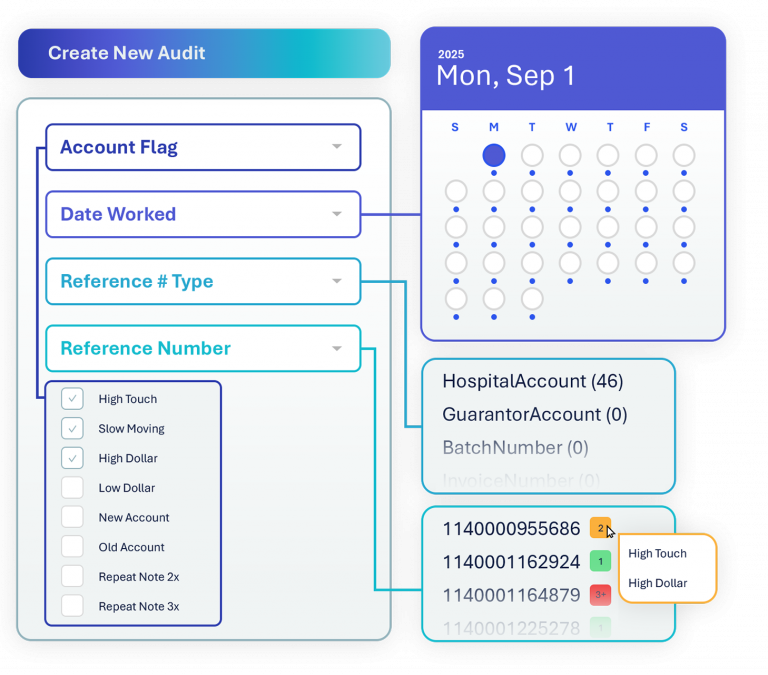
Streamline the auditing process, provide comprehensive reporting capabilities, and facilitate staff assessments, all in one user-friendly platform. With QA+P, managers can easily identify areas for education and process improvements across all revenue cycle teams.
Revenue Cycle Analytics
Powered by advanced algorithms and intuitive dashboards, our platform provides comprehensive insights into revenue cycle performance, allowing hospitals to identify trends, pinpoint areas for improvement, and optimize workflows.
Demand Workforce
Optimize and simplify how charge and staff nurses fill available shifts, enhancing staffing efficiency with our cloud-based web and mobile app.